
The Cameron McEvoy Effect: Why Sprinters Are Training Less and Swimming Faster
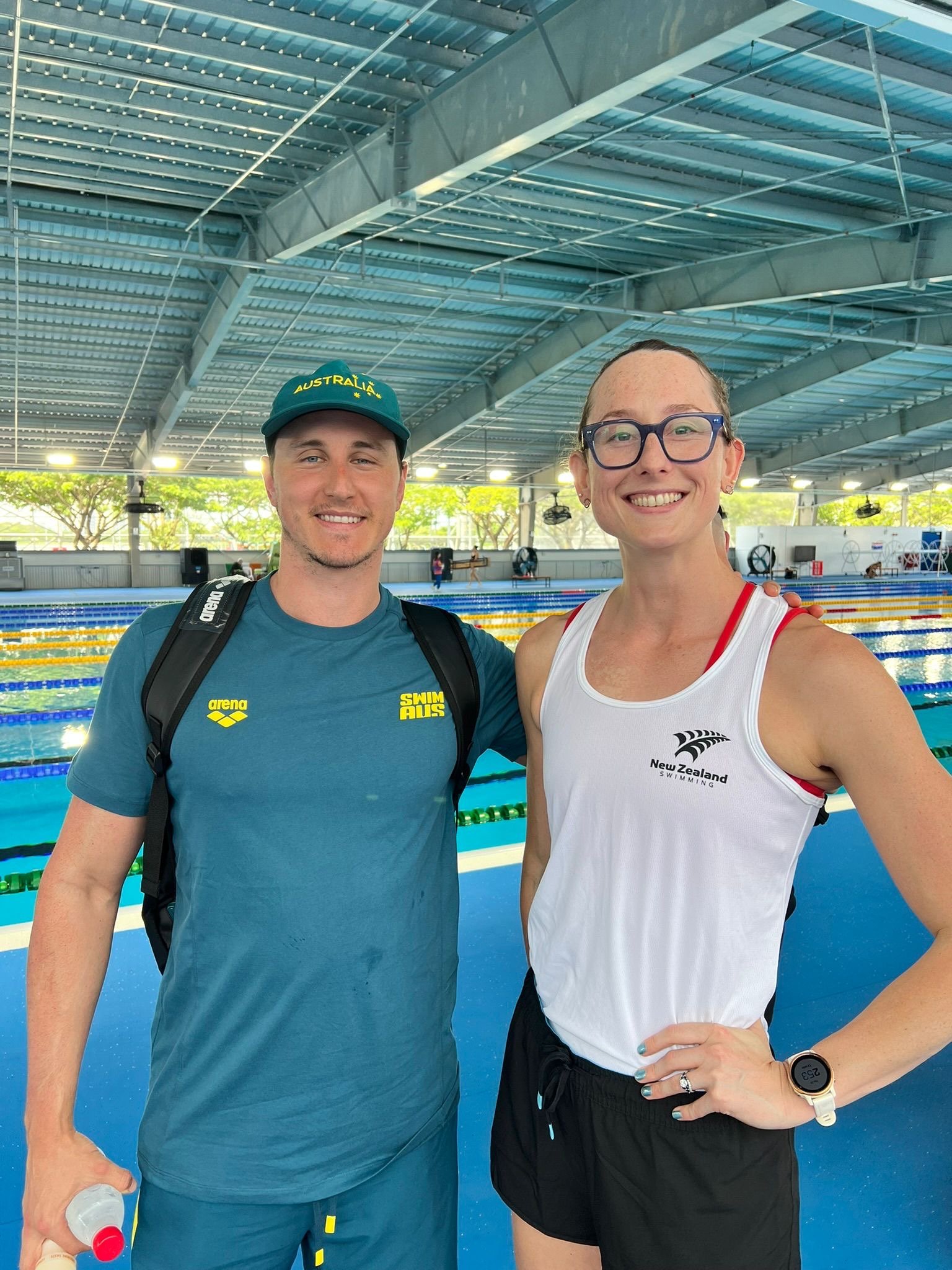
Laura Quilter and Cam McEvoy, SIngapore Worlds 2026
Across recent conversations on Torpedo Swimtalk, a clear theme has started to emerge among elite sprinters in their 30s: less swimming, more strength work, smarter recovery - and faster times.
For decades, sprint swimming operated on a simple philosophy: more kilometres meant better performances. Endless aerobic work, double sessions and heavy training loads were considered the price of speed. But athletes like Amanda Lim and Laura Quilter are now part of a growing movement challenging that belief entirely — heavily influenced by the highly “unconventional’ sprint model developed by Olympic champion Cameron McEvoy and coach Tim Lane.
The philosophy sounds almost radical in swimming terms: drastically reduce kilometres, prioritise maximal speed and power, lift heavier, protect the nervous system, recover harder and focus on quality instead of exhaustion.
And for these women, the results are arriving not in their teens or early twenties, but in their thirties.
In separate conversations on Torpedo Swimtalk, both Lim and Quilter described remarkably similar shifts away from traditional high-volume sprint training. Quilter, who returned to the sport after years away, explained that she wanted to completely rethink the assumptions she grew up with in elite swimming.
“I wanted to challenge my entire narrative of swimming,” she said. “How little can I swim and still get faster?”
Instead of rebuilding herself around 10 or 12 swim sessions a week, Quilter shifted toward three or four highly targeted pool sessions combined with extensive gym-based power work, Olympic lifting and plyometrics. She immersed herself in the principles behind McEvoy’s training philosophy - particularly the emphasis on speed, overload and nervous system freshness.
“I followed Cam’s stuff a lot because he was the world lead in that space,” she explained.
Lim’s experience mirrored many of the same ideas, even if the process initially felt psychologically uncomfortable. At 32, the Singaporean Olympian admits that reducing swim volume challenged everything she thought training was supposed to feel like.
“I’d get to the pool, do two or three 35m dive maxes, and that would be it,” she said. “Then I’d feel like I didn’t get any training done.”
For swimmers raised inside traditional systems, less water can feel almost irresponsible. But after disappointing swims at World Championships, Lim and coach Bobby Hurley shifted decisively toward a strength-first training block.
“We decided, let’s just focus on strength right now,” she explained.
Within roughly three months, she dropped half a second in the 50 freestyle - a huge margin in elite sprint swimming - despite doing what she described as “no power work, no speed endurance work.”
What makes this new sprint movement especially fascinating is that these athletes are not blindly copying McEvoy’s exact program. They are adapting its principles to female physiology, mature athletes and real-world life demands.
Lim spoke openly about the differences between male and female athletes.
“Cam is a male athlete, right? A male body works differently and a female body works differently as well.”
Unlike McEvoy - who reportedly removed almost all aerobic swimming at one point - Lim found she still needed a small aerobic component for both physiological and psychological reasons. Quilter similarly described tailoring the philosophy to fit her own body, history and recovery needs rather than treating it like a rigid blueprint.
That flexibility may actually be one of the most important parts of this evolution.
The common themes remain: less fatigue, more quality, more power, more mobility, greater technical precision, and recovery as performance - not weakness.
Strength training, in particular, has shifted from supplementary work to the centrepiece of sprint development. Lim now performs weighted pull-ups with 40 kilograms attached and describes herself as “a strength-based athlete.” Quilter rebuilt her comeback around Olympic lifting, resisted sprint work and plyometric development. Similar themes are now emerging across international sprint swimming, with athletes like Kasia Wasick also speaking openly to Torpedo Swimtalk about prioritising quality, recovery and precision over the traditional high-volume grind.
Recovery, too, has become non-negotiable. Lim reflected candidly on how little attention younger swimmers often give to recovery while growing up inside high-volume systems. Quilter, balancing nursing and elite competition, realised nervous system freshness mattered as much as any swim set. Across all these recent Torpedo Swimtalk conversations, there was a strikingly similar message: the old identity of “hard work” being measured by exhaustion is beginning to disappear.
And perhaps that is the real story emerging from this new generation of sprinting.
For Masters swimmers, the implications are enormous.
Many mature athletes spend years believing they simply need to “train harder” to offset ageing, often defaulting toward more kilometres and more fatigue. But these conversations suggest the opposite may sometimes be true - particularly for sprint and middle-distance athletes.
Older swimmers frequently already possess decades of aerobic conditioning. What tends to decline is power, mobility, recovery capacity and nervous system sharpness. The emerging sprint model championed by athletes like Lim and Quilter targets exactly those qualities: explosive strength, technical precision, mobility, speed reserve and freshness. Rather than chasing exhaustion, the emphasis shifts toward protecting quality. And for many Masters swimmers balancing careers, families, recovery limitations, and reduced training time, that shift may be transformative.
For both elite and Masters swimmers, the implications are significant.
The message emerging from these recent Torpedo Swimtalk conversations is not simply that athletes should train less. It is that they should train with greater intent. Years in the sport have taught athletes like Lim and Quilter what matters most: power, precision, recovery, mobility, nervous system freshness, and the ability to produce true speed when it counts. Instead of chasing exhaustion, the focus shifts toward protecting quality. And for a growing number of swimmers in their 30s and beyond, that shift is producing something many once thought unlikely: Lifetime best performances.
As Lim reflected during her conversation on Torpedo Swimtalk: “There isn’t just one way to do things. You can try different things… there’s still so much left to discover.”
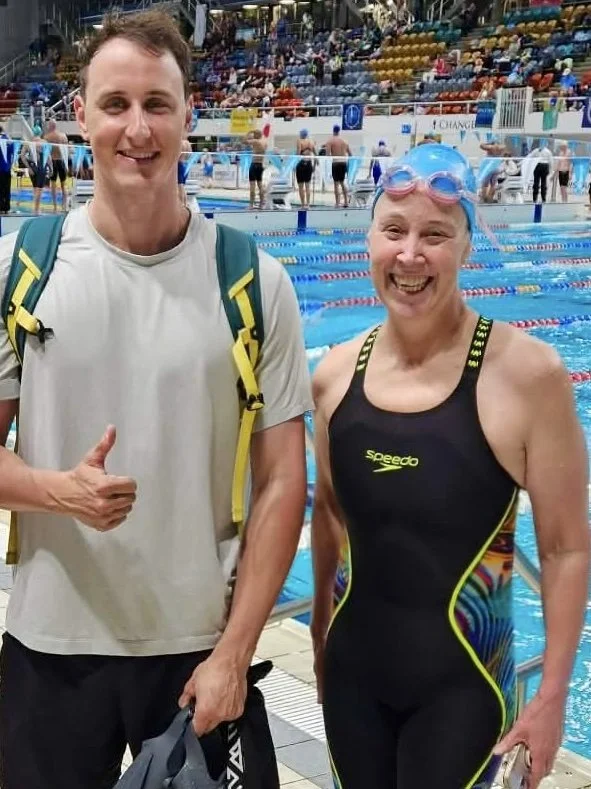
. Australian Masters Nationals 2026, Cam McEvoy with the Author